
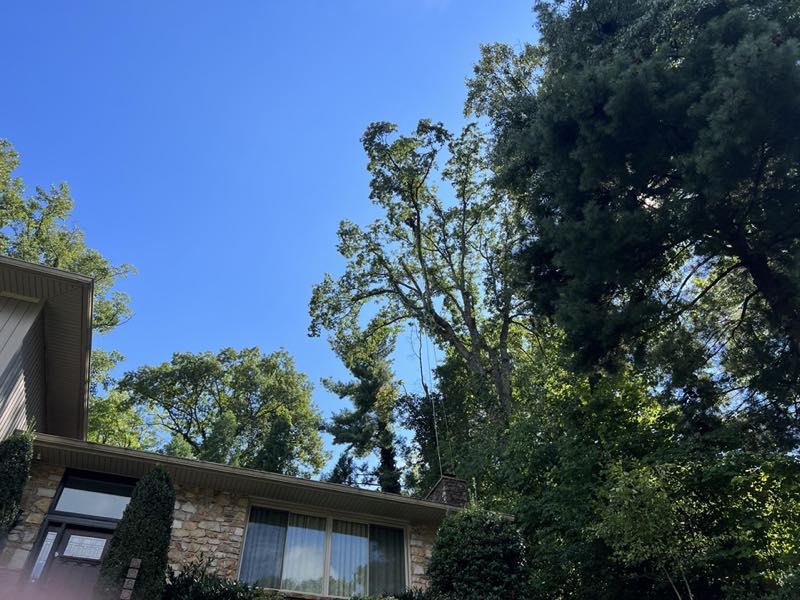
Hazardous and dead tree removal
A hazard is a defect plus a target. A hollow tree in the back of a woodlot can stand for years. The same tree twenty feet from a bedroom is a different conversation, and it is the one worth having before the next ice storm rather than after.
- 10+Years in the trees
- 4.8★From 24 reviews
- ISATrained climbers
- EST. 2019Roanoke & Salem based
What we look for.
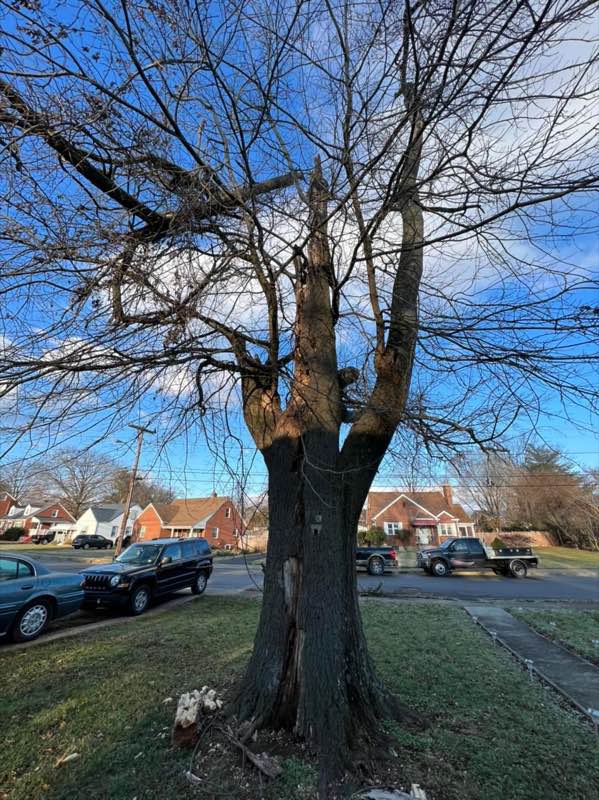
Mushrooms or conks at the base, which usually mean root or butt rot that you cannot see. Cavities and hollow trunks. Cracks running vertically up the stem. Tight V-shaped unions with bark pinched inside them -- included bark -- which is a classic split-in-a-storm setup. A recent lean with soil heaved on the opposite side of the trunk. Big deadwood held up in the canopy. Whole-canopy dieback or bare branch tips well into the growing season.
Dead trees get more dangerous to remove every year.
This is the part homeowners underestimate. A tree that died last season is still sound enough to climb and rig. Three years on, the wood has punked out, limbs fail when you load them, and the safe way to take it down involves a lift or a crane instead of a climber -- which costs considerably more. Waiting almost never saves money on a dead tree.
Sometimes the honest answer is that it can stay.
Not every ugly tree is a hazard, and not every hazard needs removal. A single failing leader can be reduced. A codominant stem can be cabled or braced. Deadwood can come out and the tree keeps standing. We would rather tell you the truth about the risk and let you decide than sell a removal that is not needed -- there is enough real work in this valley without inventing it.
Hazard work covers
- Standing dead and declining trees over structures, drives and play areas
- Leaning trees with heaved or cracked soil at the root plate
- Split trunks, cracked leaders and storm-damaged crowns
- Trees with root or butt rot, conks and hollow stems
- Deadwood removal where the tree itself is worth keeping
- A straight assessment of whether it actually needs to come down
How we assess it
Send photos or have us look
The base of the trunk and the soil around it tells us more than the canopy does. Include it.
Defect plus target
We look at what is actually wrong with the tree and at what is under it if it fails. Both have to be there for it to be urgent.
You get options, not one option
Remove, reduce, cable, or monitor -- with what each one costs and what risk it leaves.
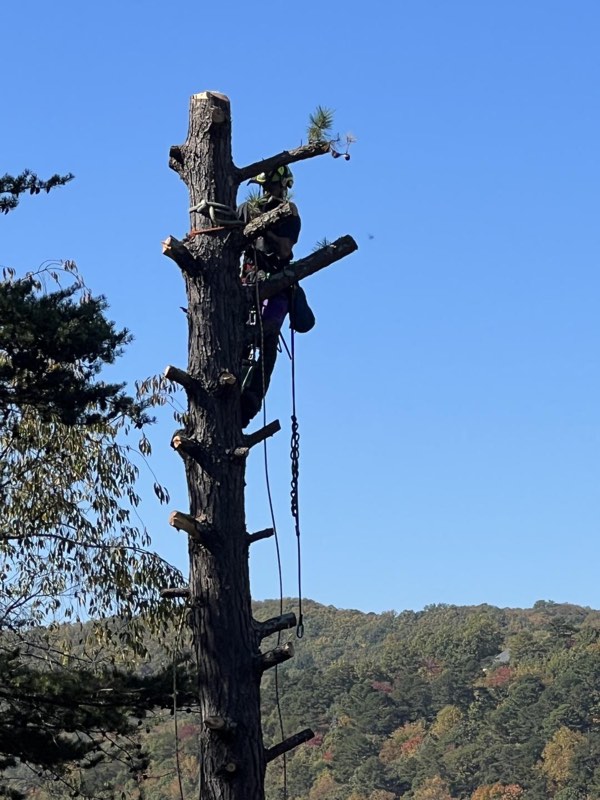
Removed on rope, in pieces
Compromised trees are not felled near structures. They come down in controlled sections.
Hazardous Tree Removal in the Roanoke Valley
What drives the price
Anyone who quotes a tree over the phone without seeing it is guessing, and the guess runs high to protect them. Here is what actually moves the number, so you can judge any quote you get — including ours.
Size and species
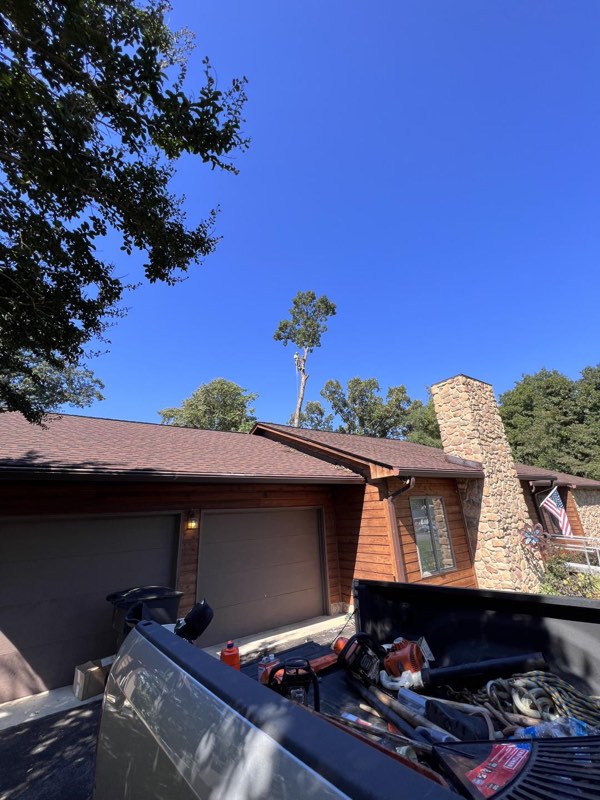
A 90-foot oak is a different job from a 30-foot dogwood. Height, trunk diameter and wood density all drive the hours.
Access
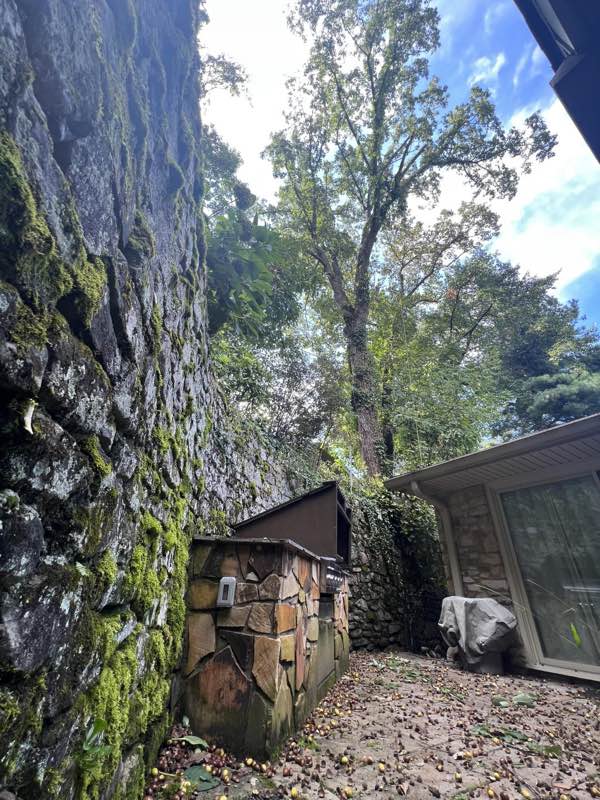
If we can get a lift to the trunk, the job goes faster and costs less. A tree behind a fence in a back yard has to come out piece by piece on ropes.
What is underneath
A tree over open lawn can be felled. A tree over your roof, deck, pool or the neighbor's fence has to be rigged down in controlled sections.
Utilities
Anything near primary power lines takes extra setup, extra care and sometimes a call to the utility first.
Cleanup level
Haul everything away, leave the wood cut for your stove, or chip the brush and leave the chips -- your call, and it changes the number.
Stump
Grinding the stump is priced separately from the removal, so you can add it or skip it.
Hazardous Tree Removal — questions
01How do I know if my tree is actually dangerous?+
Scratch a small twig with a thumbnail -- green underneath means it is alive. Look for mushrooms at the base, cracks in the trunk, and fresh soil heaving on the uphill side of a lean. If you see any of those over a house or a driveway, it is worth having someone look. Photos of the trunk base are the single most useful thing you can send us.
02The tree looks fine, but should I worry about the roots?+
Reasonable worry. Root problems are invisible until they are not, and construction, trenching and grade changes within the drip line are the usual cause. A tree that has had a driveway or utility trench cut near it in the last few years deserves a look.
03Can a leaning tree be saved?+
A tree that has always leaned and has grown reaction wood to compensate is usually fine. A tree that started leaning recently -- especially with cracked or heaving soil on the high side -- is failing at the roots and should come down. The difference matters, and it is worth having someone who can tell them apart.
Also worth knowing about
Where we work
Based in Southwest Roanoke with a second location in Salem. Near the valley and not listed? Call and ask.
Roanoke
Old Southwest, South Roanoke, Raleigh Court, Grandin Village, Wasena
Tree service in RoanokeSalem
Downtown Salem, West Salem, East Salem, Lake Spring, Fort Lewis Mountain
Tree service in SalemBotetourt County
Daleville, Troutville, Fincastle, Buchanan, Blue Ridge
Tree service in Botetourt CountySmith Mountain Lake
Moneta, Huddleston, Union Hall, Westlake, Hardy
Tree service in Smith Mountain LakeTell us about the tree.
Send a couple of photos and get a real number back the same day. No sales visit, no obligation.
Faster still: text photos to (540) 815-6225 and we will price it from those.