
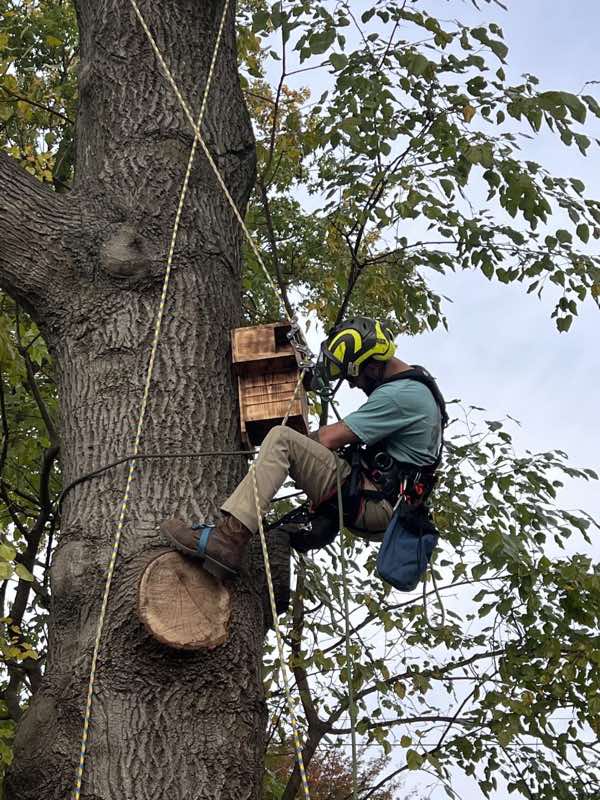
Tree trimming and pruning, done to standard
Pruning is the most common thing done to trees and the most commonly done wrong. Good cuts heal and make a tree stronger. Bad cuts invite decay and set up the failure you will pay to clean up in five years.
- 10+Years in the trees
- 4.8★From 24 reviews
- ISATrained climbers
- EST. 2019Roanoke & Salem based
What we will not do: top your tree.
Topping -- cutting the leaders back to stubs -- is still the most requested and most damaging thing in this trade. The tree responds by throwing dense regrowth that is attached only at the surface of the old wound, so in a few years you have a taller, heavier, weaker tree than the one you were worried about. If your tree is too big for its spot, there are proper reduction cuts back to a lateral that keep it sound. We will show you the difference at the quote.
The cuts, in plain terms.
Crown cleaning takes out the dead, dying and broken wood -- the stuff most likely to come down on its own. Crown raising lifts the lower edge for clearance over a driveway, walk or roof. Crown reduction brings the overall size down using cuts back to laterals that can take over as leaders. Crown thinning opens the canopy so light and wind move through instead of catching it like a sail. Most jobs are a mix, and we will tell you which ones your tree actually needs rather than selling you all four.
Timing matters more than people expect.
Dormant-season pruning, roughly late fall through late winter here, is easiest on most hardwoods and lets us see structure without leaves in the way. Oaks in particular are better pruned in the cold months to avoid oak wilt pressure. Dead and hazardous wood comes out whenever it is found -- that does not wait for a season.
What a pruning job includes
- A walk-around first, so you know which cuts we are making and why
- Proper cuts at the branch collar -- no flush cuts, no stubs, no topping
- Clean, sharp, sanitized tools between trees where disease is a concern
- Clearance pruning off roofs, gutters, drives and walkways
- All brush chipped and hauled, work area raked and blown
How we approach a pruning job
Tell us the problem, not the prescription
"Limbs are on my roof" or "it blocks all my light" is more useful than a cut list. We will match the cuts to the goal.
We assess structure
Codominant stems, included bark, deadwood, decay pockets, clearance issues. This is where ISA training earns its keep.
You get a scope in writing
Which trees, which cuts, how much clearance -- so there is no argument afterward about how much came off.
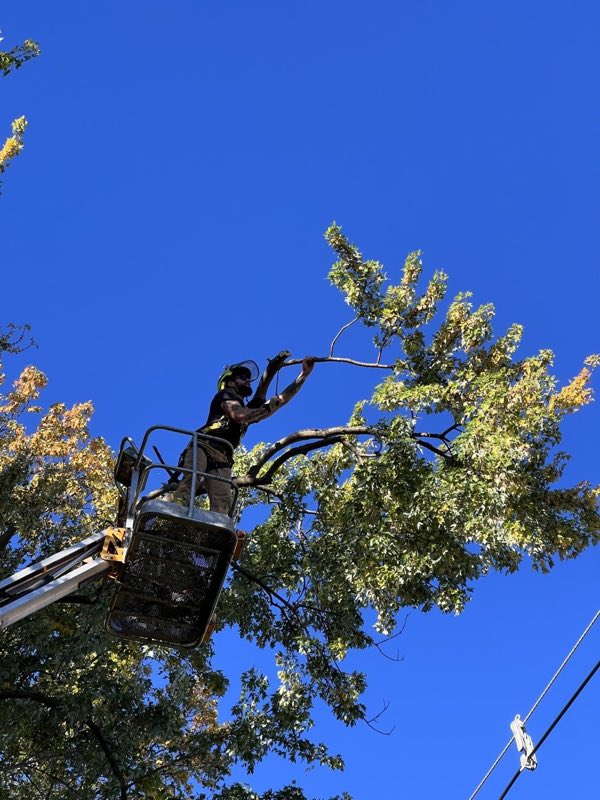
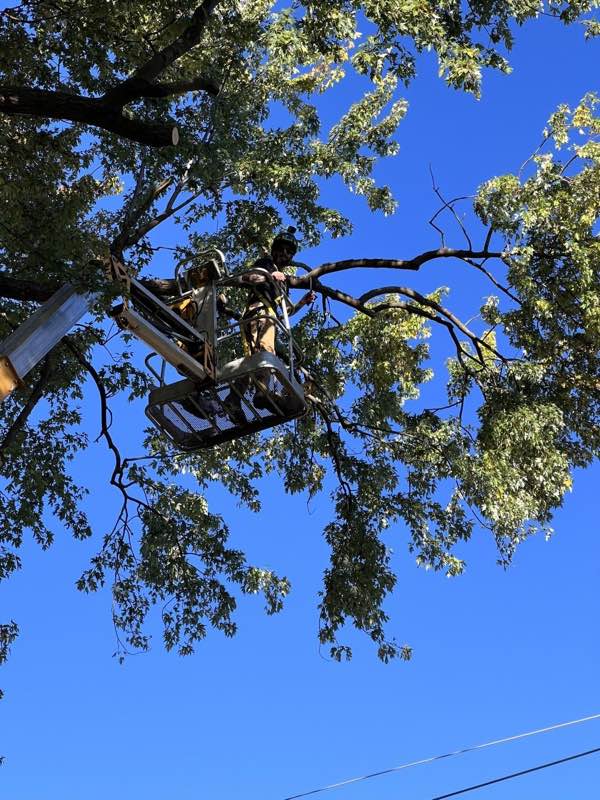
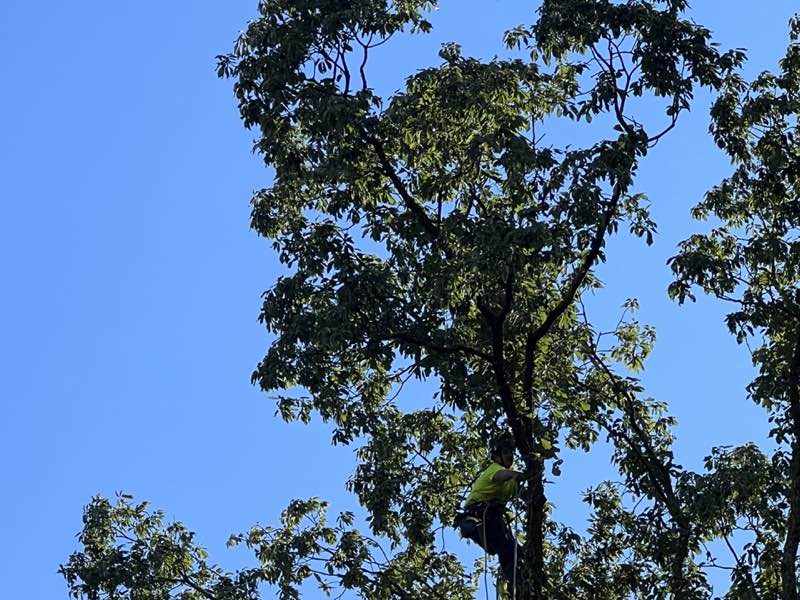
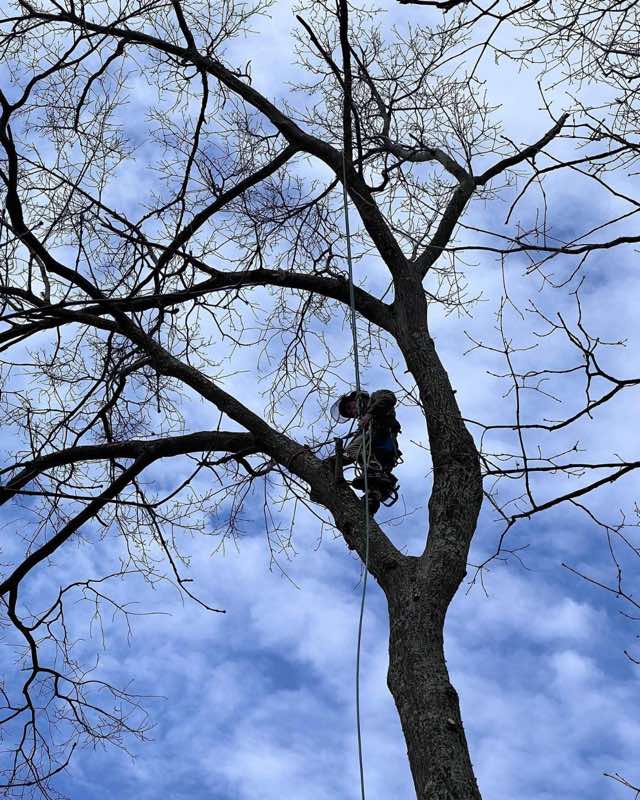
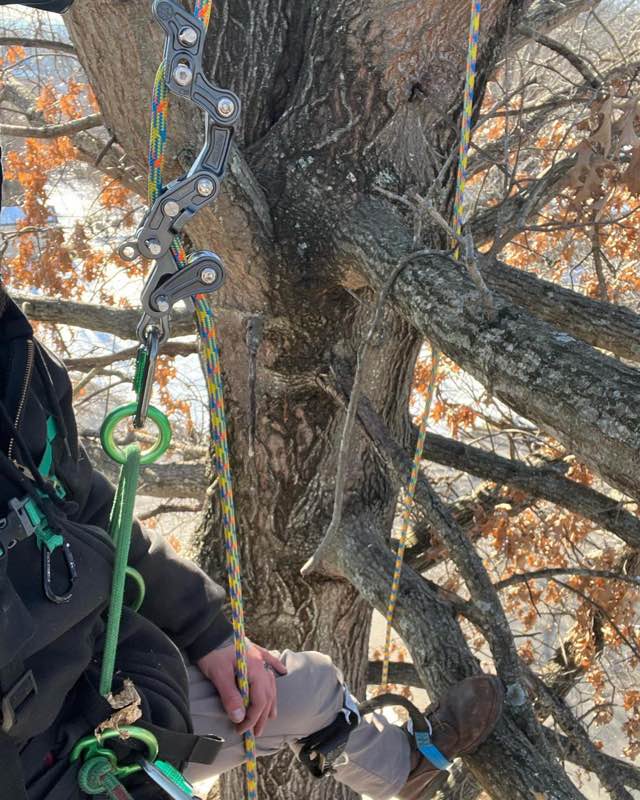
Cuts get made from the canopy
On rope or from a lift, so we can reach the right cut point instead of the reachable one.
Tree Trimming & Pruning in the Roanoke Valley
What drives the price
Anyone who quotes a tree over the phone without seeing it is guessing, and the guess runs high to protect them. Here is what actually moves the number, so you can judge any quote you get — including ours.
Size and species
A 90-foot oak is a different job from a 30-foot dogwood. Height, trunk diameter and wood density all drive the hours.
Access
If we can get a lift to the trunk, the job goes faster and costs less. A tree behind a fence in a back yard has to come out piece by piece on ropes.
What is underneath
A tree over open lawn can be felled. A tree over your roof, deck, pool or the neighbor's fence has to be rigged down in controlled sections.
Utilities
Anything near primary power lines takes extra setup, extra care and sometimes a call to the utility first.
Cleanup level
Haul everything away, leave the wood cut for your stove, or chip the brush and leave the chips -- your call, and it changes the number.
Stump
Grinding the stump is priced separately from the removal, so you can add it or skip it.
Tree Trimming & Pruning — questions
01How much can safely come off in one go?+
As a working rule, not more than about a quarter of the live canopy in a season on a healthy mature tree, and less on a stressed or older one. Anyone willing to take half your tree off in one visit is telling you something about how they work.
02How often should trees be pruned?+
Young trees benefit from structural pruning every two to three years, and that early work prevents most of the expensive problems later. Mature trees usually need attention every three to five years, mostly deadwood and clearance.
03Can you just cut the branches over my roof?+
Yes, and that is one of the most common calls we get. Clearance pruning off a roof is straightforward, and getting limbs off your shingles stops both the abrasion and the squirrel highway.
Also worth knowing about
Where we work
Based in Southwest Roanoke with a second location in Salem. Near the valley and not listed? Call and ask.
Roanoke
Old Southwest, South Roanoke, Raleigh Court, Grandin Village, Wasena
Tree service in RoanokeSalem
Downtown Salem, West Salem, East Salem, Lake Spring, Fort Lewis Mountain
Tree service in SalemBotetourt County
Daleville, Troutville, Fincastle, Buchanan, Blue Ridge
Tree service in Botetourt CountySmith Mountain Lake
Moneta, Huddleston, Union Hall, Westlake, Hardy
Tree service in Smith Mountain LakeTell us about the tree.
Send a couple of photos and get a real number back the same day. No sales visit, no obligation.
Faster still: text photos to (540) 815-6225 and we will price it from those.